PUBLIC PRESENTATION OF THE CONSERVATION MANAGEMENT PLAN FOR BAHAY NA PULA
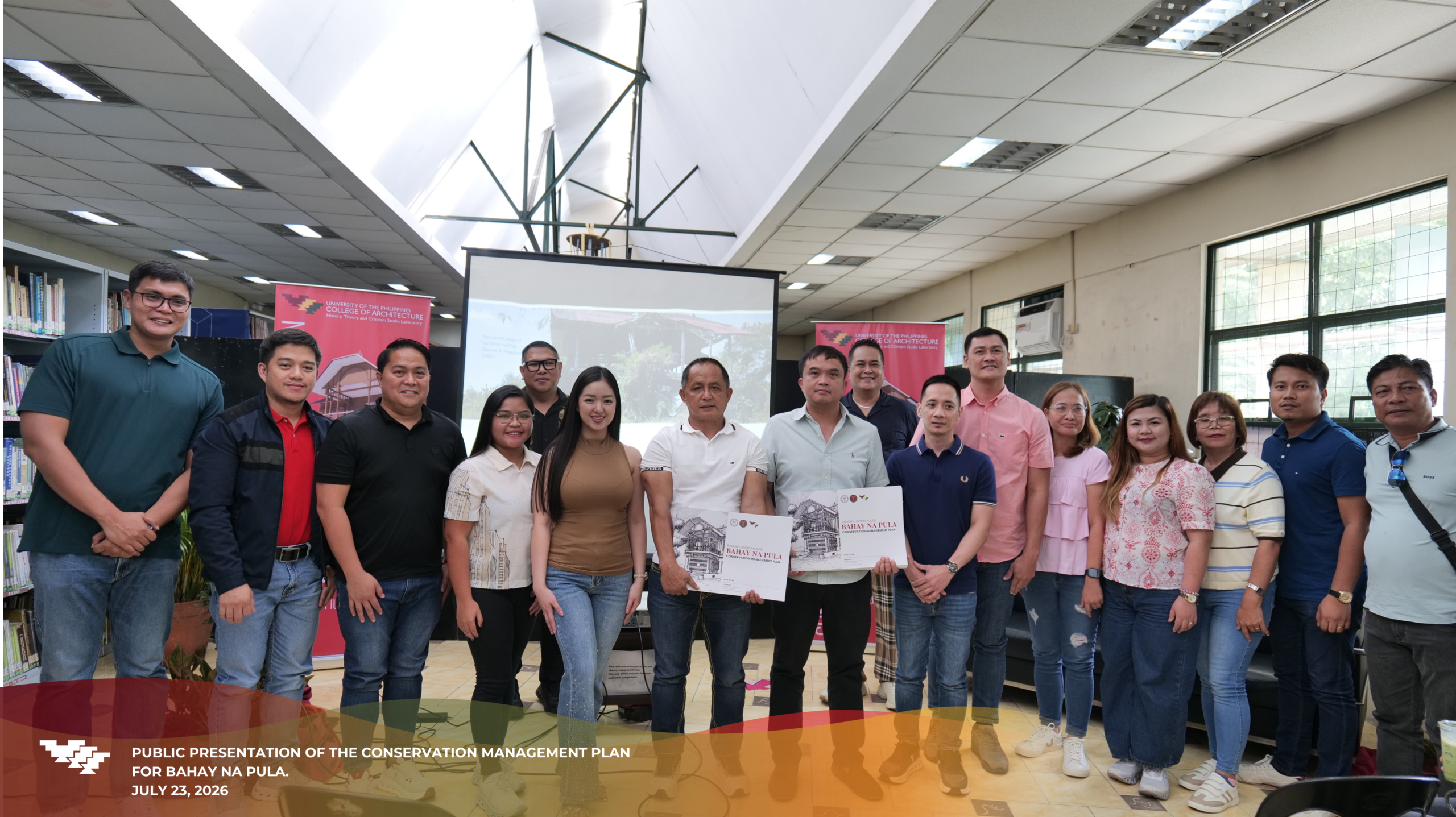
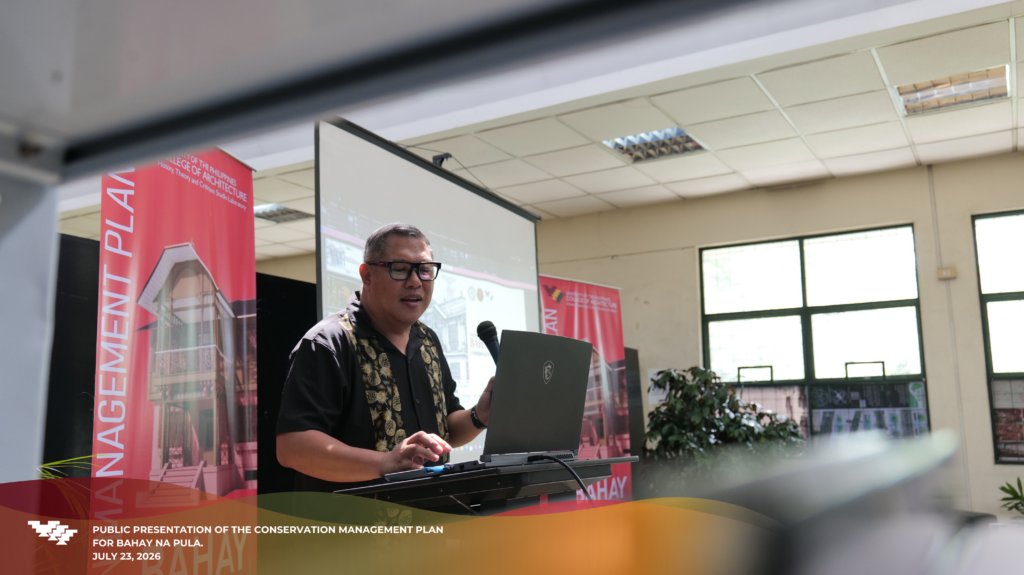
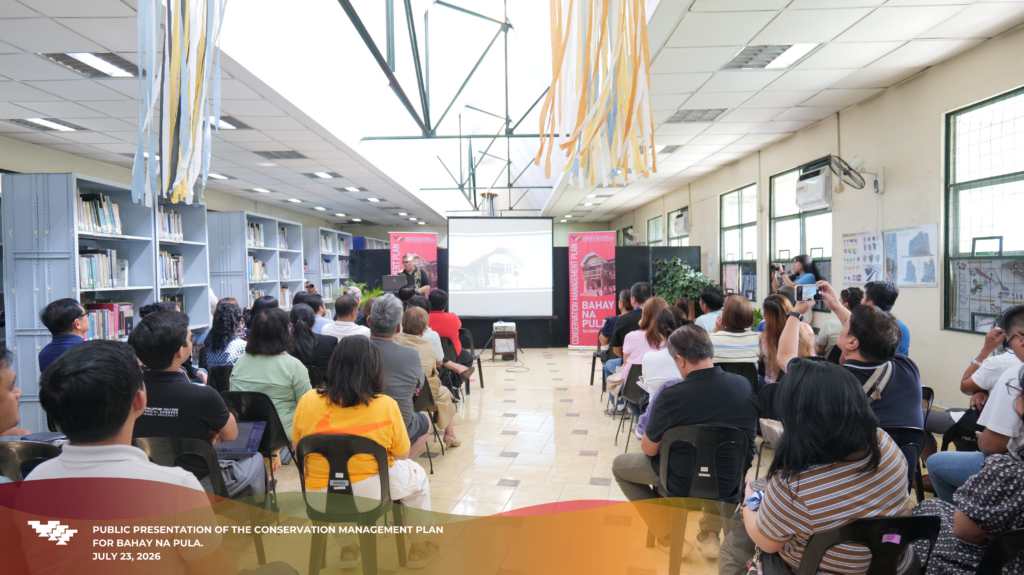
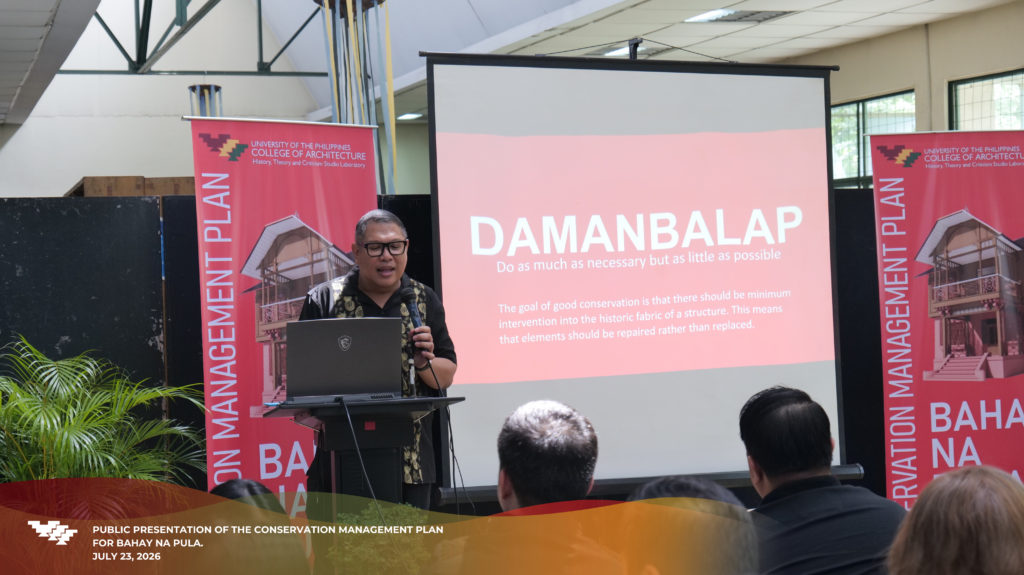
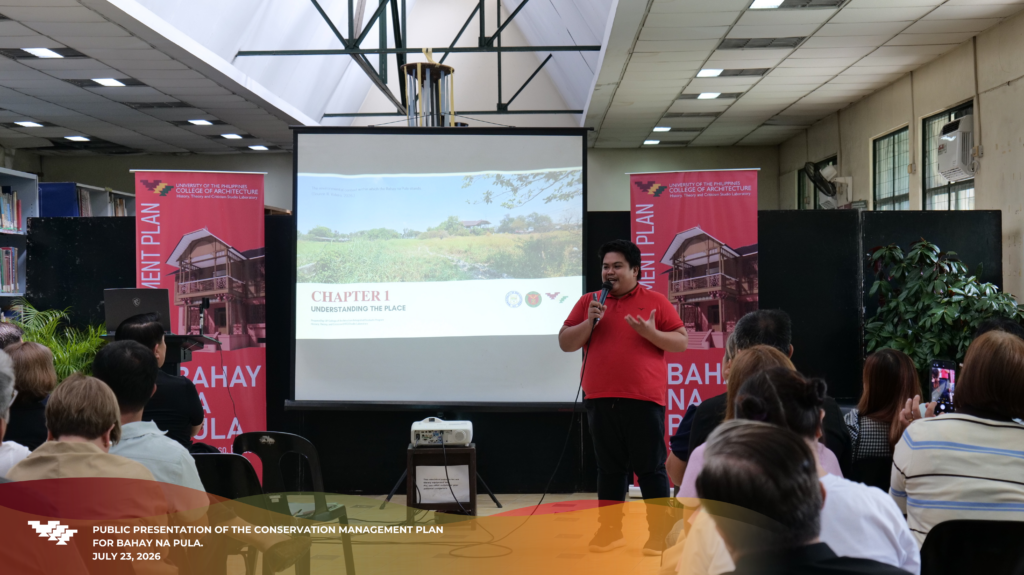
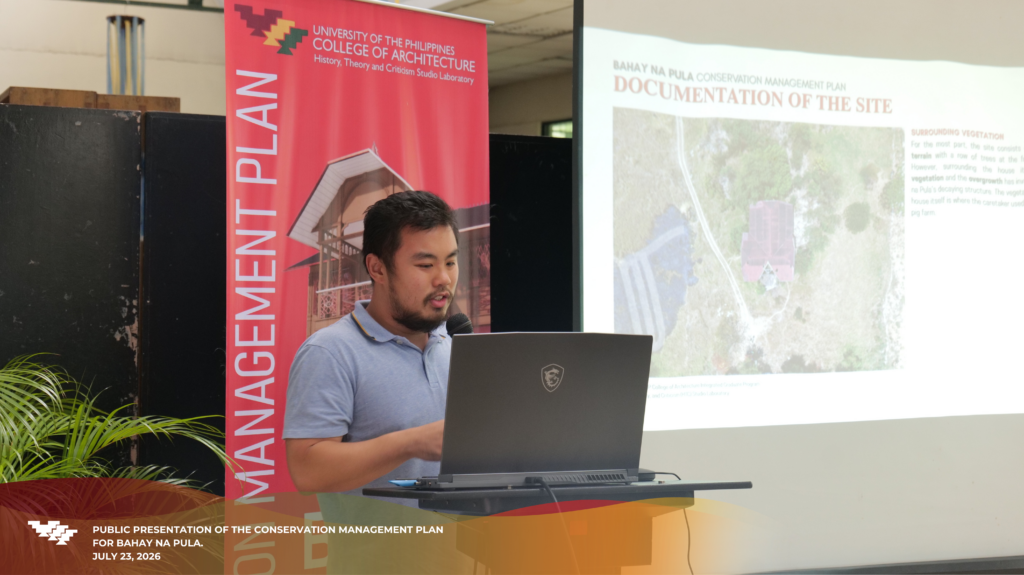
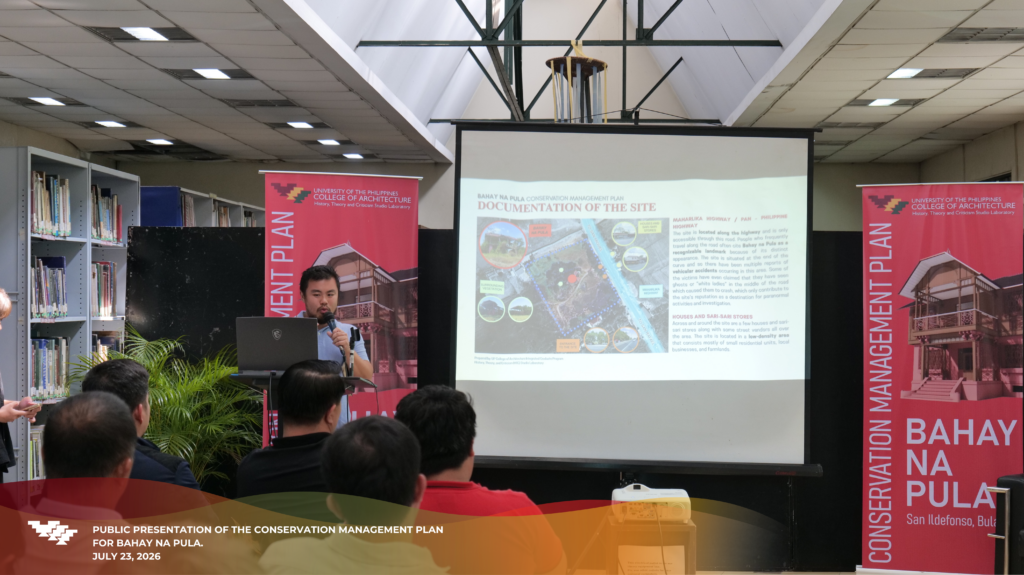
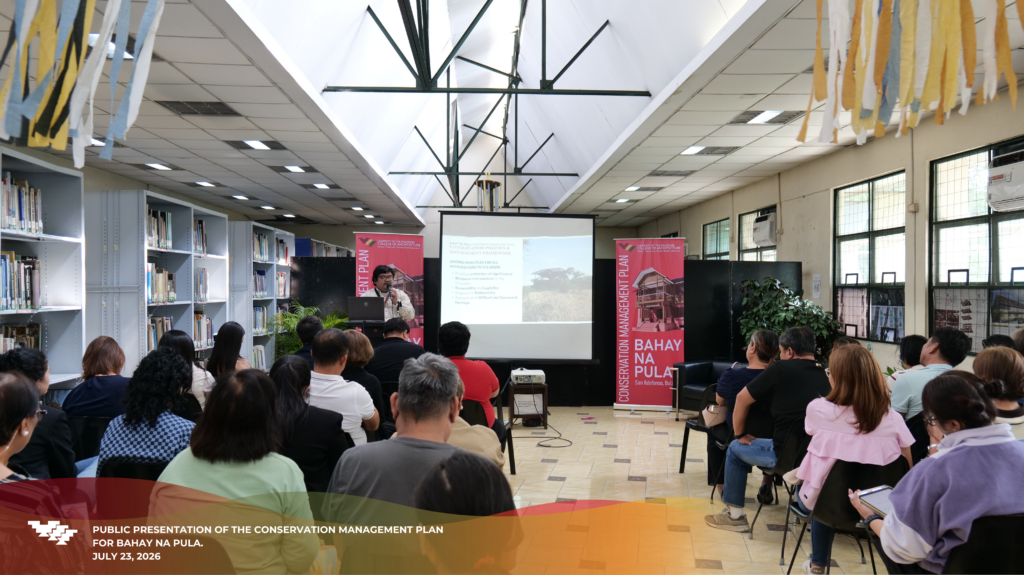
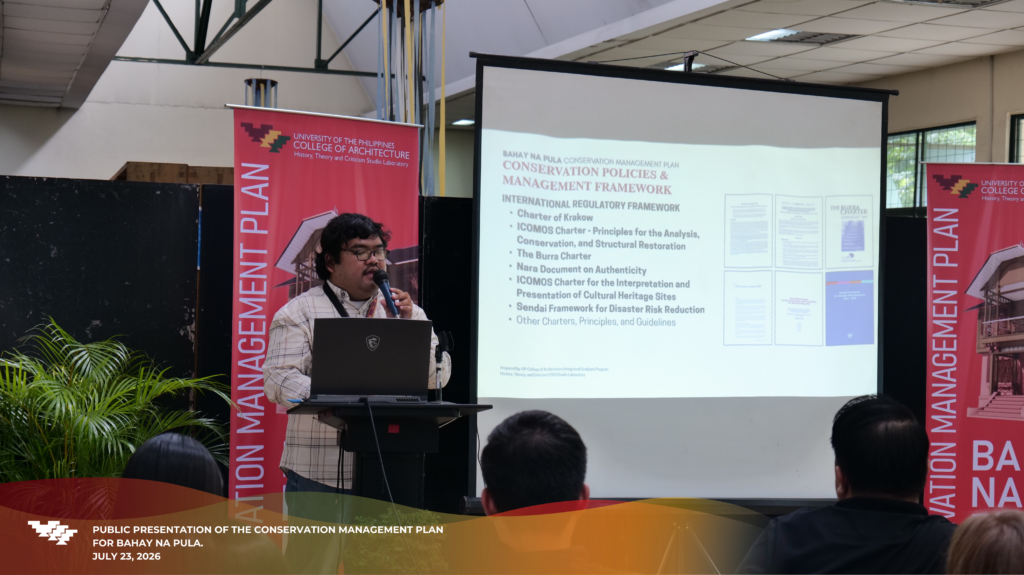
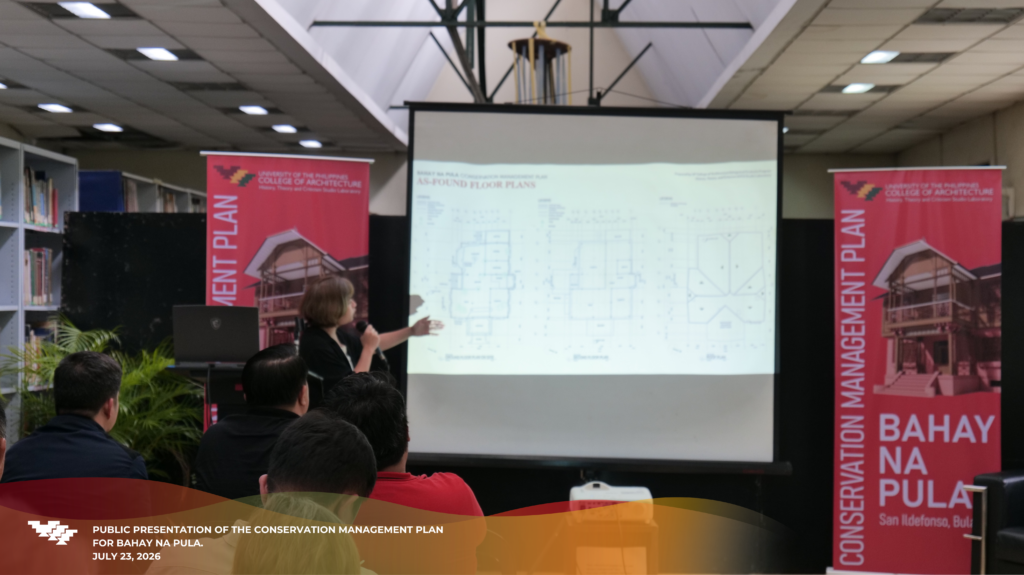
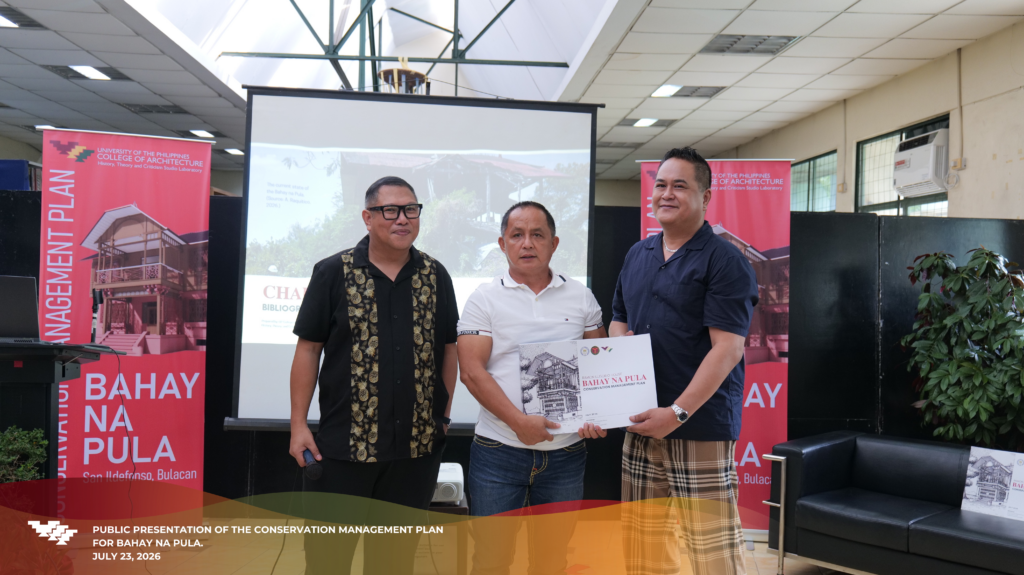
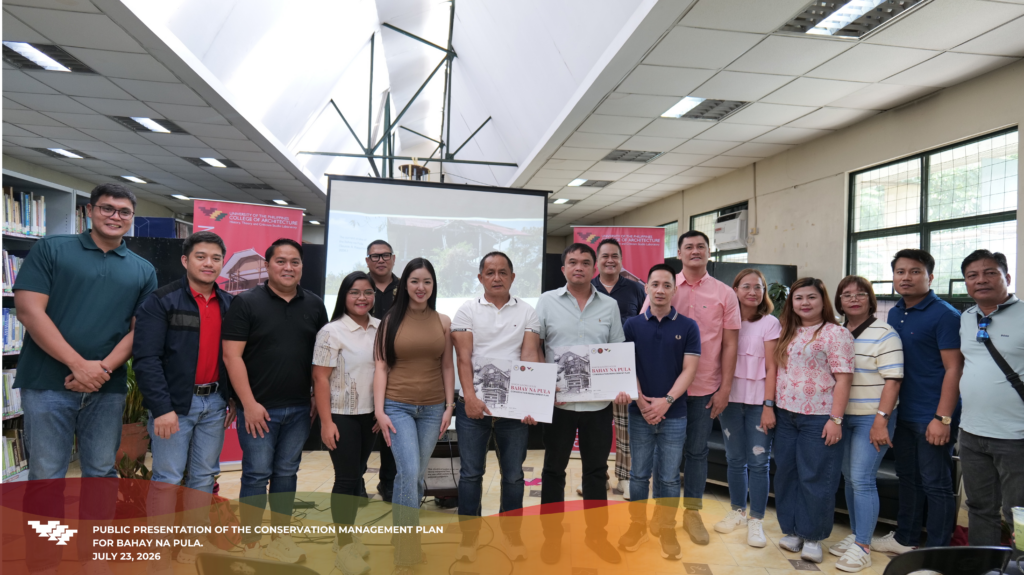
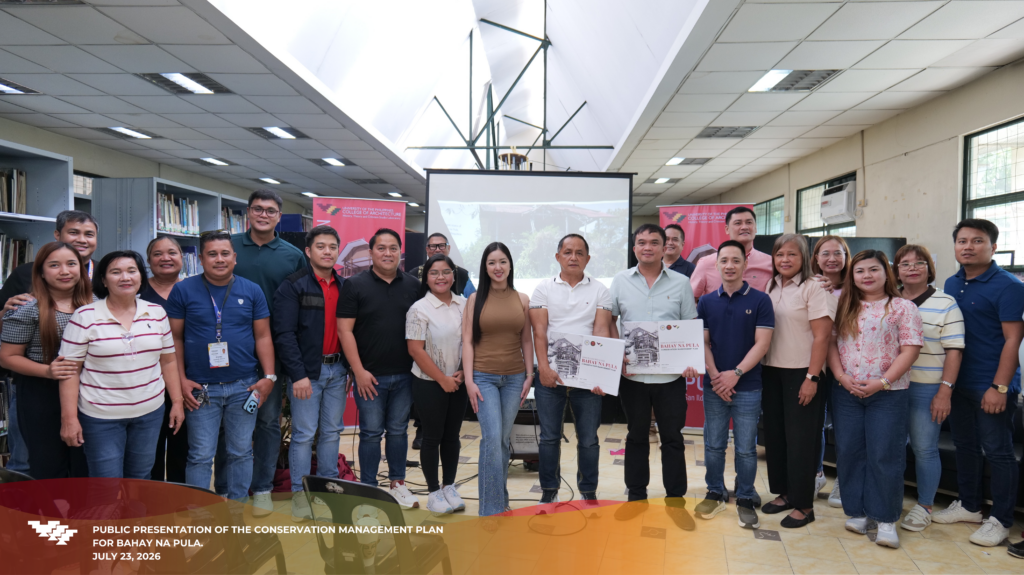
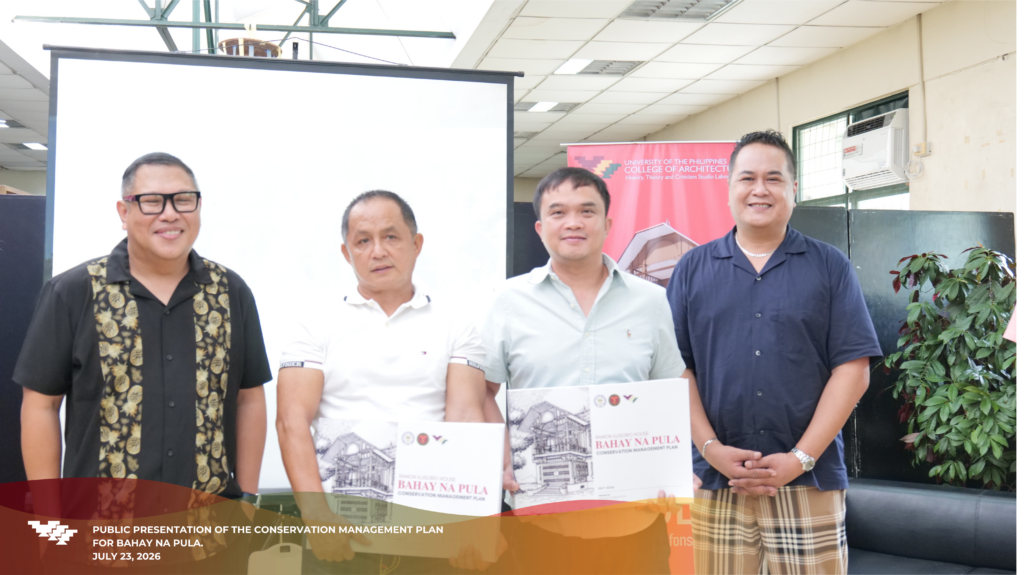
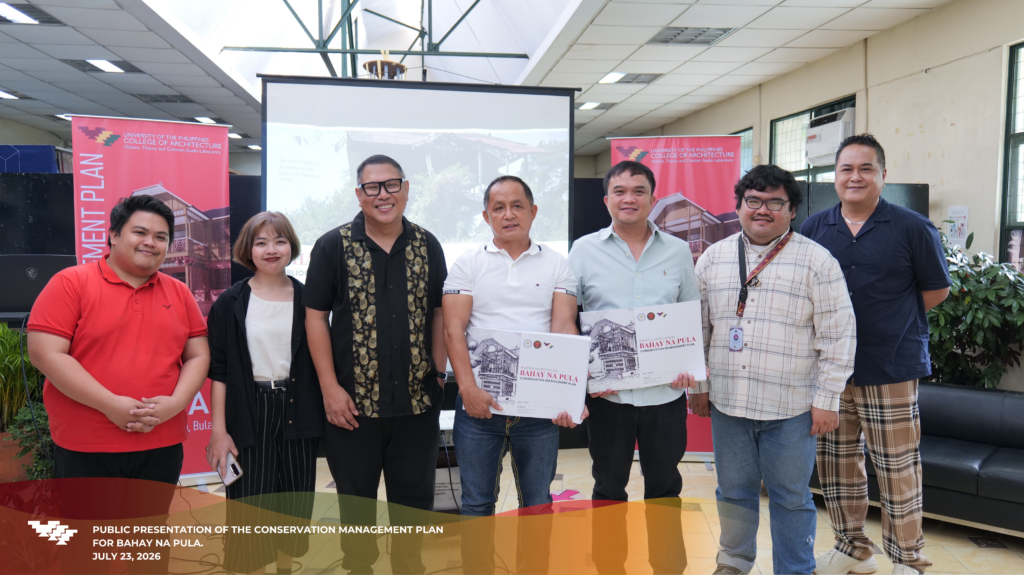
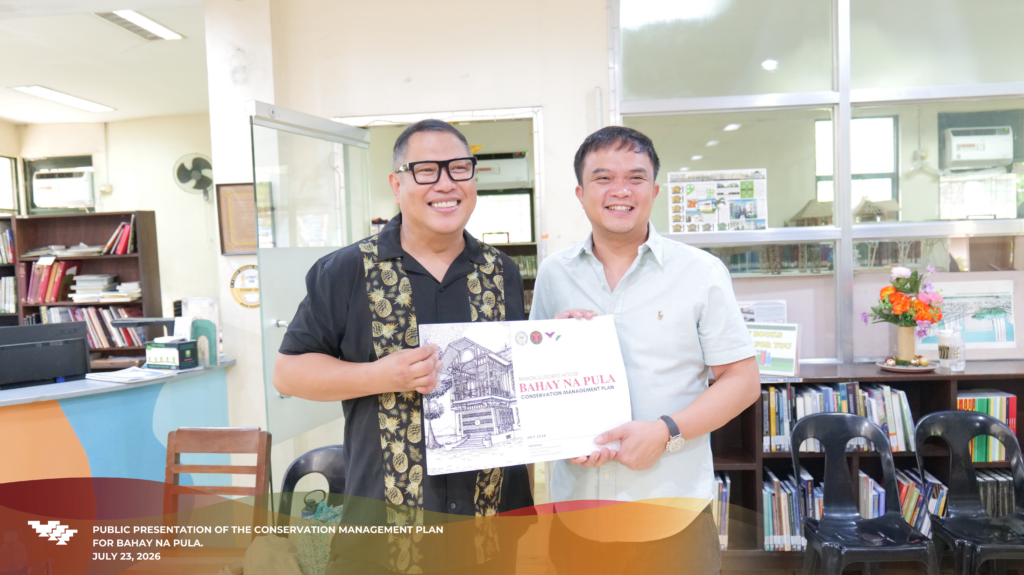
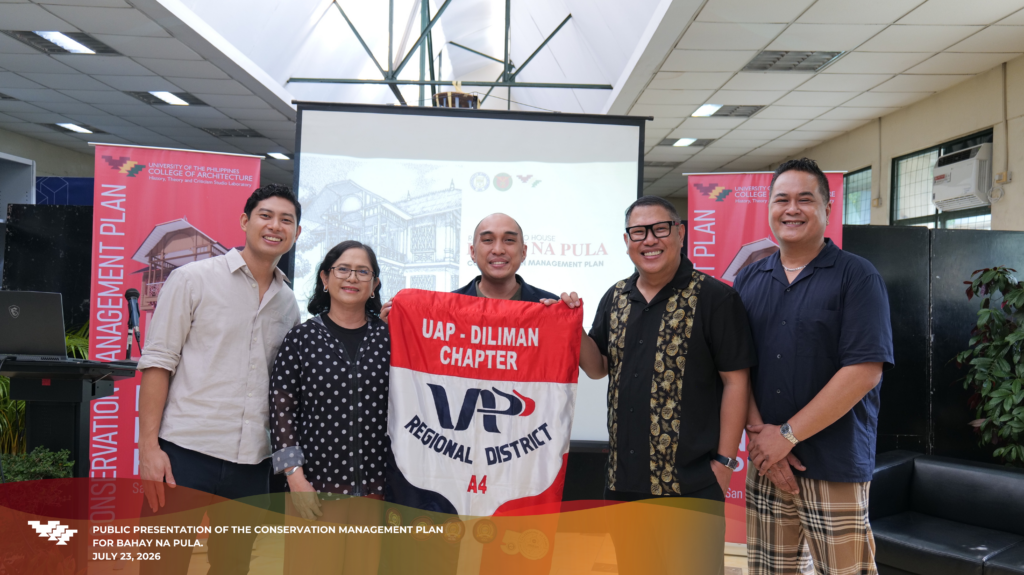
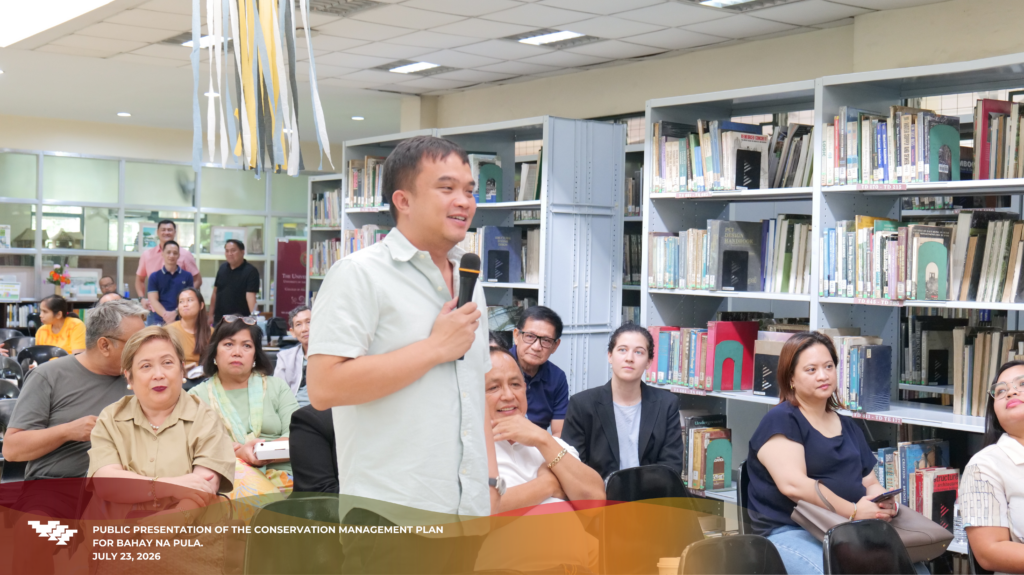
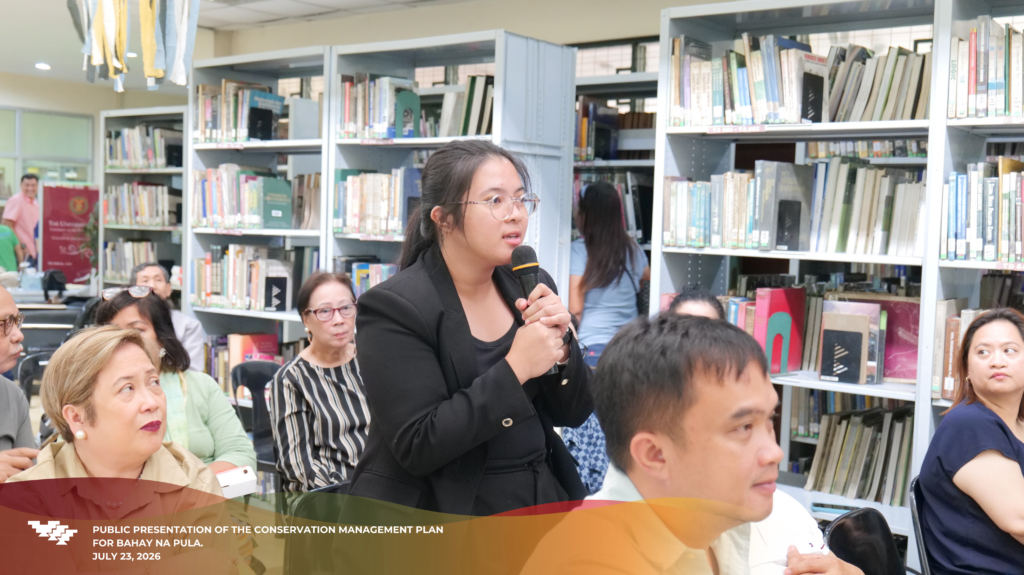
The University of the Philippines College of Architecture, through the History, Theory and Criticism Studio Laboratory (HTCSL), presented to the public the Conservation Management Plan (CMP) for Bahay na Pula.
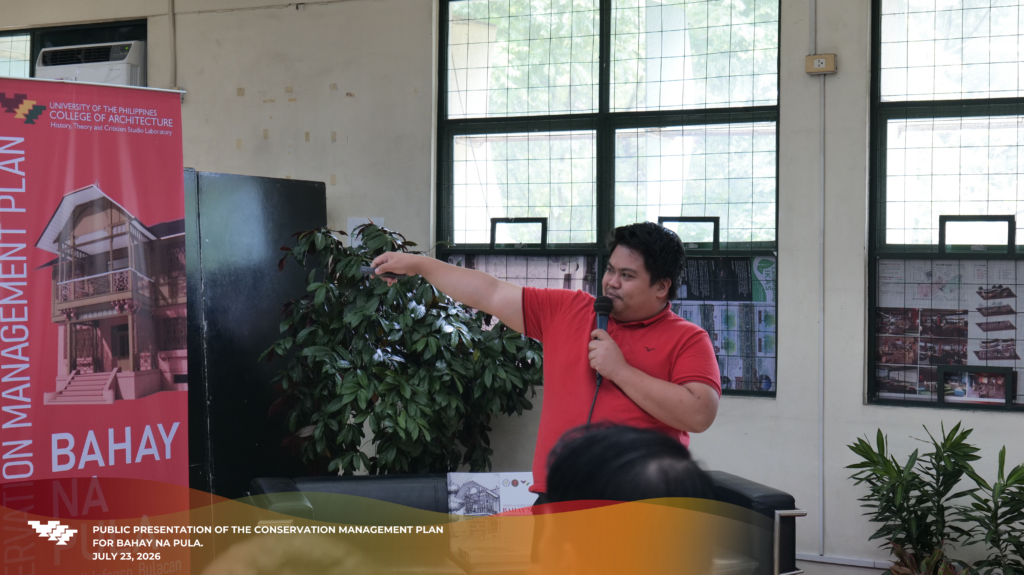
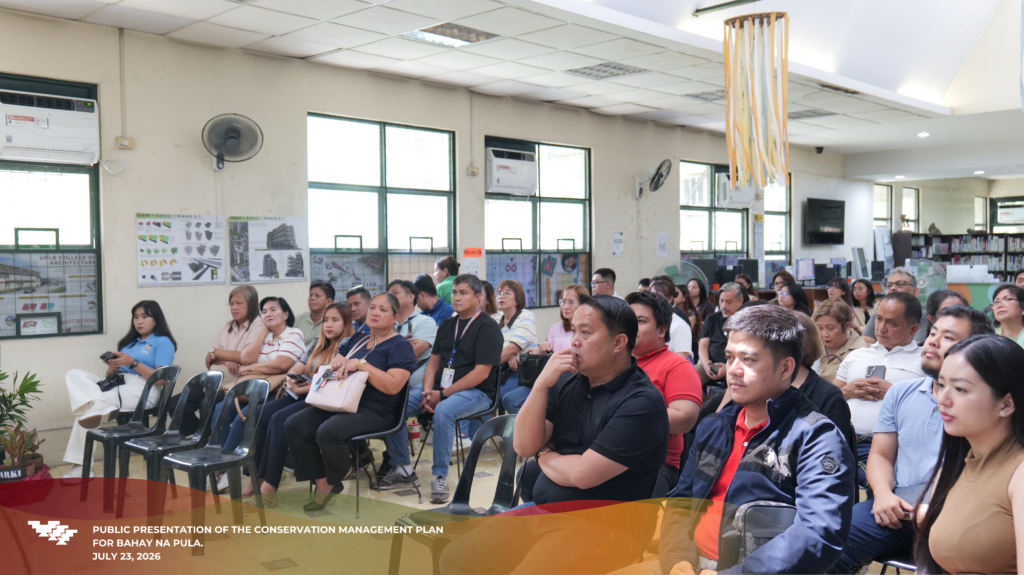
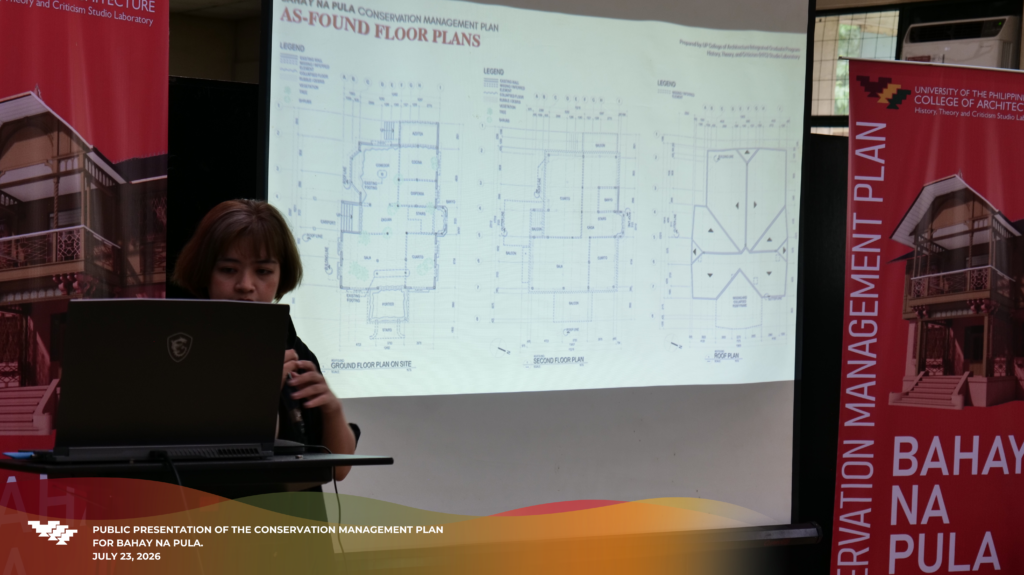
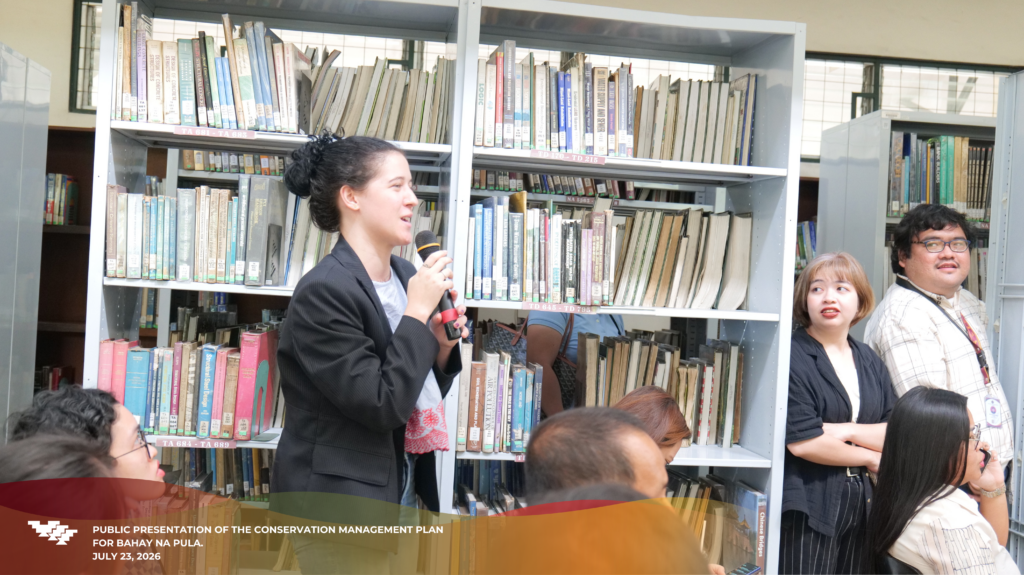
This forum marked an important milestone in the continuing effort to safeguard one of the Philippines’ most significant yet painful heritage sites. The presentation introduced the research, documentation, conservation policies, and adaptive reuse strategies developed for Bahay na Pula, which provided an opportunity for stakeholders to share their insights, recommendations, and aspirations for the site’s future.
The CMP of the “Bahay na Pula” was authored by Dr. Gerard Lico’s students and staff.
Held at UP College of Architecture Library “July 23 2026”, this relevant academic gathering was graced by the presence of honorable Congressman Cholo Violago, the San Ildefonso Mayor Gazo Galvez, and the LGU’s officials.
The participation of the attendees was instrumental in shaping a conservation framework that honors historical truth, preserves architectural heritage, and ensures that Bahay na Pula remains a place of remembrance, education, and collective reflection for generations to come.
About the Project
The Conservation Management Plan for Bahay na Pula presents a comprehensive strategy for the protection, conservation, and future stewardship of one of the Philippines’ most important sites of memory. Built in the early twentieth century and later associated with the wartime atrocities committed against Filipino women during the Second World War, Bahay na Pula embodies both architectural significance and profound historical testimony.
Grounded in extensive archival research, architectural documentation, material assessment, oral histories, and stakeholder consultation, the plan establishes policies for conserving the building’s physical fabric while safeguarding its intangible heritage. It proposes interventions that respect authenticity, guide future restoration, mitigate risks, and ensure the site’s long-term sustainability.
More than a technical conservation document, the plan envisions Bahay na Pula as a living memorial—a place where architecture becomes a vessel of remembrance, human rights education, historical justice, and community healing. Through a balanced approach to conservation and interpretation, the project seeks to preserve not only the structure itself but also the enduring stories of resilience, dignity, and collective memory that it represents.