
Doctor of Philosophy in the Designed and Built Environment (PhDDBE)
Doctor of Philosophy in the Designed and Built Environment (PhDDBE) covers disciplines in the designed environment practice from a multi- disciplinary perspective.
Holders of any Master’s Degree may be admitted. The program is vertically integrated with the master’s programs: Master of Architecture (MArch), Master of Tropical Landscape Architecture (MTLA), and Master of Arts in Architecture Studies (MAAS). This is enabled through the Advanced Studio Topic course, DBE 311, which encourages doctoral and master’s students to work together towards common research themes, under the guidance of the studio laboratory faculty.
The PhD in Designed and Built Environment (PhDDBE) advances a trans-disciplinary approach to the study of the designed and built environment recognizing its interconnected social, cultural, environmental, technological and economic dimensions. It views architecture and design as fields that engage not only space and form but also questions of society, culture, environment, and human experiences.
The PhDDBE offers two curricular tracks based on students’ prior graduate preparation. Track A for Related Master’s Degrees, provides a focused doctoral pathway for students from architecture, landscape architecture, interior design , city planning and related fields requires 39 units. Track B, for Unrelated Masters’s Degrees, provides additional coursework to strengthen disciplinary and methodological foundations for doctoral research and requires 48 units. Both tracks integrate core major, qualified elective, cognate and dissertation coursework, enabling students to pursue specialized research within a broader trans-disciplinary framework.


Graduation Requirements
Completion of coursework
One (1) journal paper acceptance or publication as first author (dissertation-related)
At least one (1) local or international paper presentation
Dissertation poster
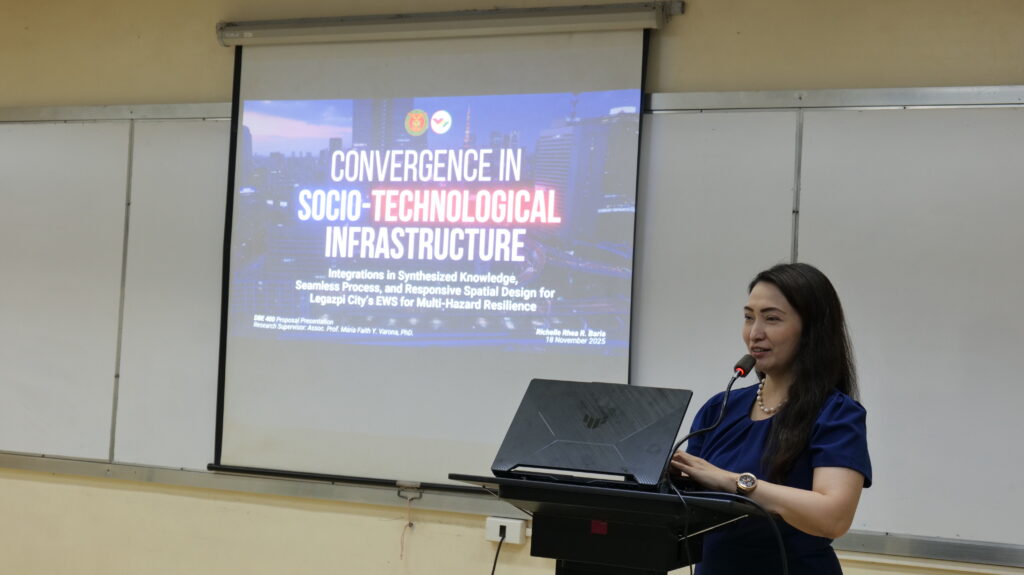
Successful Dissertation Oral Defense
Approved Dissertation Book
PhDDBE Program Director
Assoc. Prof. John Arvin R. Manaloto, PhD
Studio Laboratories Applicable